Most investors see property management as a cost center. After thirty years and five market cycles, I’ve learned it’s either your greatest competitive advantage—or your silent wealth destroyer.
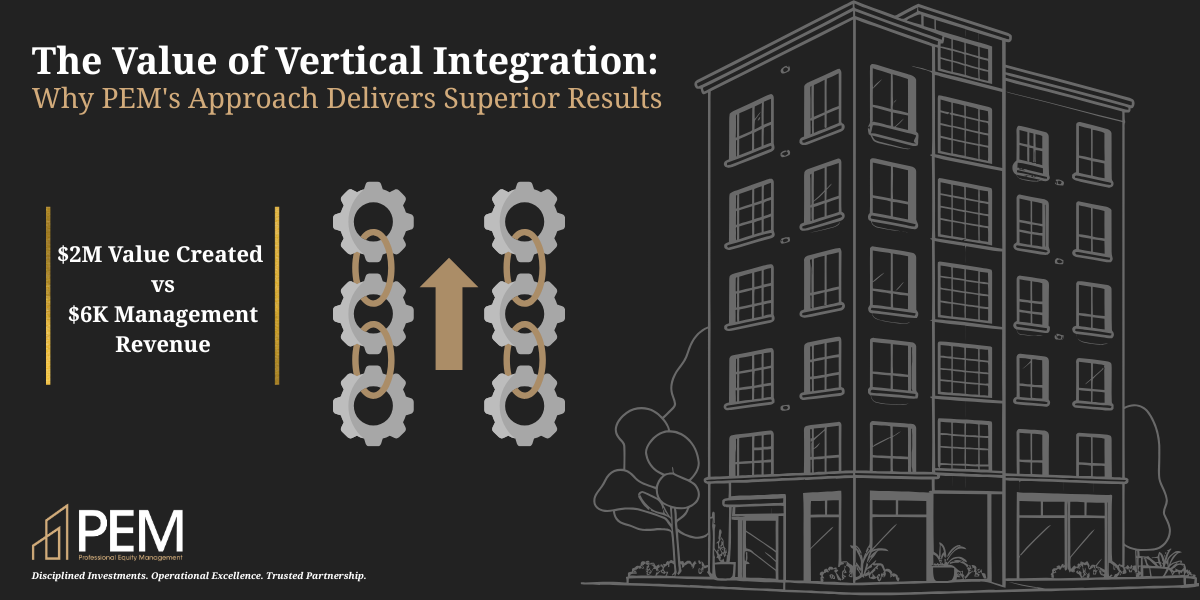
The numbers reveal a structural flaw that quietly costs investors millions while preventing the hands-on stewardship both residents and investors deserve: when you entrust an $80 million asset to a third-party manager and NOI increases by $100,000, you receive approximately $2 million in increased value while the management company earns just $6,000 in additional revenue.
This misalignment doesn’t just limit financial returns—it makes the level of care and attention we believe necessary structurally impossible to deliver. When you’re not directly accountable for every resident interaction, every vendor relationship, and every operational decision, you cannot provide the stewardship that both families and investors have entrusted you to deliver. That’s precisely why PEM chose a fundamentally different path.
The Mathematics of Misaligned Incentives
Here’s what sophisticated investors understand but rarely discuss: property management fees typically range from 4% to 12% of gross rental income, meaning management companies capture only a fraction of any operational improvements they implement. Property owners, meanwhile, receive the full benefit through asset appreciation.
Consider the economics: Property managers earning within this 4-12% range oversee 8+ staff members, produce financials, manage emergencies, coordinate capital projects, and protect the asset. That $100,000 NOI improvement translates to roughly $2 million in increased property value at a 5% cap rate, but generates only $4,000-$12,000 in additional management revenue.
The incentive to maximize value simply doesn’t exist. What you get instead is property caretaking—not business operation.
When Market Forces Amplify Structural Problems
Today’s conditions have turned this misalignment into a crisis. Since 2021, the multifamily industry has added nearly 2 million new apartment units, with 2023 delivering 438,500 completions—the highest level since 1987—and 2024 continuing this unprecedented surge.
This supply explosion strained an already fragile talent ecosystem. Industry data shows that multifamily employee turnover hit 33%—more than 10 percentage points above the national average. The average property manager tenure is just 19.2 months—barely completing one full lease cycle before departure. National Apartment Association surveys confirm that maintaining staffing levels ranks as the third most significant concern for property managers, with the cost of a wrong hire averaging $17,000.
The implications for investors are profound. Multifamily operators continue to struggle with employee retention, as burnout and staffing shortages persist. Young professionals—often leasing agents in their early twenties—get promoted to Asset Manager, then Community Manager, suddenly overseeing 6-8 staff members and 200+ family homes with minimal experience. Property management becomes learning-by-crisis when residents demand immediate solutions with zero tolerance for disruption.
This talent crisis creates a vicious cycle: inexperienced managers make costly mistakes, residents become dissatisfied, staff burnout accelerates, and the revolving door continues. Each departure represents lost institutional knowledge, disrupted resident relationships, and decreased operational efficiency. For investors, this translates to higher vacancy rates, increased maintenance costs, and suppressed NOI—exactly when market conditions demand operational excellence most.
The PEM Alternative: Born from Necessity, Proven by Results
When PEM started thirty-one years ago, we faced a simple choice: master property operations or fail. With just a duplex requiring new electrical and plumbing—work I completed 70% myself—we learned that real estate success demands business operation, not property caretaking.
As we grew from two units to eight, then fifty-two, every emergency call mattered. Plumbing leaks, roofing failures, noise complaints, sewer backups, difficult collections—each challenge taught us that residents’ happiness and our investors’ returns depended on creative problem-solving and preventive thinking, not reactive management.
Our 44-unit acquisition crystallized this philosophy. The property housed only eleven tenants because of a leaking roof that rendered all other units uninhabitable. No third-party manager would prioritize the systematic problem-solving this situation demanded. We fixed the fundamental issues, implemented preventive systems, and restored full occupancy. Our vertically integrated approach wasn’t a strategic decision made during growth—it was essential to our survival from that first duplex.
These early experiences taught us that every maintenance call, every resident interaction, every vendor relationship either builds long-term value or destroys it incrementally. We learned that for every dollar invested in preventive measures, properties save an estimated $5-10 in emergency repairs, property damage, and operational disruption while creating happier residents who renew leases and care for their homes. We discovered that knowing your vendors personally—their capabilities, pricing, and reliability—can turn a $10,000 emergency into a $1,500 solution. Most importantly, we understood that resident satisfaction correlates directly with NOI performance, but only when operations are structured to capture and act on that correlation.
This hands-on foundation taught us what we later witnessed during our Detroit portfolio transition. When we sold those properties to out-of-market investors, they immediately switched to third-party management and eliminated the operational improvements we knew were essential. When residents realized ownership no longer cared about their experience, they stopped being good residents. The operational deterioration was swift and predictable—exactly what happens when property caretaking replaces business operation.
As we developed systems that mastered daily challenges, we measured the tangible impact on property conditions, turnover, collections, and NOI. The evidence became undeniable: no one would care for our residents and protect our investors’ capital better than we could, because we understood our fundamental mission—generating wealth through strategic multifamily investments while operating thriving communities that enhance residents’ lives.
This focus stems from the core values guiding our operations for three decades: Integrity, Stewardship, Respect, Growth, and Urgency. We had to master both property care and resident experience to achieve sustainable success in multifamily ownership and management.
Quantified Value Creation: Sterling Creek and Beyond
A recent example from our portfolio illustrates vertical integration’s financial impact perfectly. At Sterling Creek at Richmond Hill in Georgia, a vendor quoted $10,000 for a repair that our team completed for under $1,500. This wasn’t luck—it reflected established vendor relationships, operational expertise, and direct accountability for outcomes.
Research confirms that focused operational improvements can significantly boost NOI, with specialized management firms reporting increases of 12% or more in the first year through optimized pricing, expense management, and resident retention initiatives. When every $100,000 in NOI improvement creates approximately $2 million in property value at a 5% cap rate, operational excellence becomes your most powerful value creation tool.
Our conservative capital structure—55-65% loan-to-value ratios with fixed rates or long-term rate caps—enables this operational focus. We’re never pressured into short-term decisions by overleveraged structures. This patient positioning proved invaluable during the 2022+ interest rate environment, protecting our investors from payment shock while competitors faced refinancing distress.
These results prompt the obvious question sophisticated investors naturally ask.
What This Really Means for Your Capital
“Why not just hire a good management company?” The answer isn’t that good third-party management doesn’t exist—it’s that the fundamental misalignment of incentives makes operational excellence structurally impossible.
Consider the practical implications: When a third-party manager negotiates with vendors, they often prioritize relationships that benefit their broader portfolio rather than optimizing costs for your specific property. They may accept 5-7% markups from preferred contractors rather than seeking the most cost-effective solutions, because those relationships serve their operational convenience across multiple properties. When they evaluate capital improvements, they focus on items that minimize their management burden rather than maximize your NOI—choosing contractor-friendly solutions over investor-optimal ones.
Third-party managers aren’t making mistakes. They’re operating exactly as incentivized: as property caretakers rather than business operators. This distinction drives every decision from vendor selection to resident relations to capital allocation. Property caretakers maintain; business operators optimize. A caretaker fixes the broken HVAC unit; a business operator analyzes usage patterns to prevent failures while negotiating volume discounts that reduce long-term maintenance costs.
The resident experience reflects this misalignment directly. Property caretakers respond to complaints; business operators anticipate needs. When a resident reports a maintenance issue, a caretaker dispatches the next available contractor. A business operator knows which contractor specializes in that specific problem, understands their pricing structure, and can coordinate repairs to minimize resident disruption while maximizing cost efficiency. This difference compounds over hundreds of interactions annually.
Most critically, third-party managers lack accountability for long-term asset performance. They don’t participate in sale proceeds, refinancing benefits, or sustained NOI growth. Their incentive structure rewards occupancy maintenance and expense management within acceptable ranges, not value optimization. Even when properties are disposed of successfully—often with significant value appreciation due to exceptional operational performance—management companies are typically replaced by new ownership regardless of their track record. This fundamental disconnect means the very parties responsible for creating value rarely benefit from the wealth they generate, while those who do benefit have no operational accountability.
When you combine operational expertise with ownership accountability, you create value that financial engineering alone cannot replicate. Our strategic focus on Sun Belt markets demonstrates this principle—we’re not just following demographic trends, we’re building sustainable operational advantages in markets where our conservative investment philosophy can compound most effectively.
The Sustainable Competitive Advantages
This hands-on approach creates multiple competitive benefits that reflect our core commitment to disciplined investments, operational excellence, and trusted partnership.
We possess superior market intelligence because we operate in these markets daily, enabling rapid pivots when conditions change. We’re analyzing data continuously, not reviewing monthly reports after opportunities disappear. When problems emerge, there are no communication delays between owners and third-party managers.
This market presence translates to tangible advantages: We know when competing properties are struggling before it shows up in market reports. We identify emerging neighborhood trends—new employers, infrastructure changes, demographic shifts—that affect rental demand and pricing power. We build relationships with contractors and suppliers that create cost advantages and faster problem resolution. When market conditions shift, we can adjust pricing, accelerate improvements, or modify operations within days, not months.
Our operational excellence extends beyond cost control to revenue optimization. We understand which unit features command premium rents, which amenities drive retention, and which operational efficiencies compound over time. This granular knowledge—gained through daily operation rather than quarterly reports—enables micro-decisions that aggregate into significant NOI improvements.
Rather than chasing maximum returns requiring perfect execution, our approach delivers superior risk-adjusted returns with built-in margin for error. Our deals don’t need everything to work perfectly—they’re structured to succeed even when market conditions shift or unexpected challenges arise.
We maintain properties in exceptional condition, eliminating retrades. Our operational excellence provides stable NOI and commands premium sale prices. This track record prevents the costly mistakes that erode investor returns over time while building the reputation that creates future opportunities.
Why We Still Manage After Thirty-One Years
Management remains the most challenging aspect of our corporate growth. But we continue because we’re stewards—both of homes for thousands of families and of hundreds of millions in investor and lender capital. Both responsibilities drive our vision to be the most trusted investment partner and operator of multifamily assets, known for integrity, performance, and exceptional service across all market cycles.
This dual stewardship isn’t abstract philosophy—it’s practical operational reality. For residents, it means maintaining safe, well-maintained communities where families can build stability and wealth. It means responding to emergencies promptly, maintaining common areas thoughtfully, and fostering environments where neighbors become communities. For investors, it means protecting and growing capital through disciplined underwriting, conservative financing, and operational excellence that persists across market cycles.
The intersection of these responsibilities creates our competitive advantage. Happy residents renew leases, care for their homes, and refer quality neighbors. Satisfied investors provide patient capital, enabling long-term operational excellence rather than short-term profit maximization. This alignment—between resident satisfaction and investor returns—only works when operations are designed to serve both constituencies simultaneously, something third-party management can’t achieve due to their structural incentive limitations.
PEM is unique because we don’t just identify great real estate—we operate it daily to maximize value and minimize risks. This focus creates competitive advantages that financial engineering cannot replicate and market cycles cannot eliminate.
In an industry often pursuing quick exits and maximum leverage, enduring value lies in fundamentals: caring for what’s entrusted to you, executing what you promise, and maintaining the discipline to operate with patient capital. When others chase returns requiring perfect market conditions, we build wealth through imperfect ones.
That’s not just our investment philosophy—it’s proof that nobody looks after your money better than you do.
For sophisticated investors seeking risk-adjusted multifamily opportunities with direct access and personal attention, operational excellence isn’t a feature—it’s the foundation. We’d welcome a conversation about how PEM’s vertically integrated approach ensures your operator cares as much about maximizing your NOI as you do.
About the Author
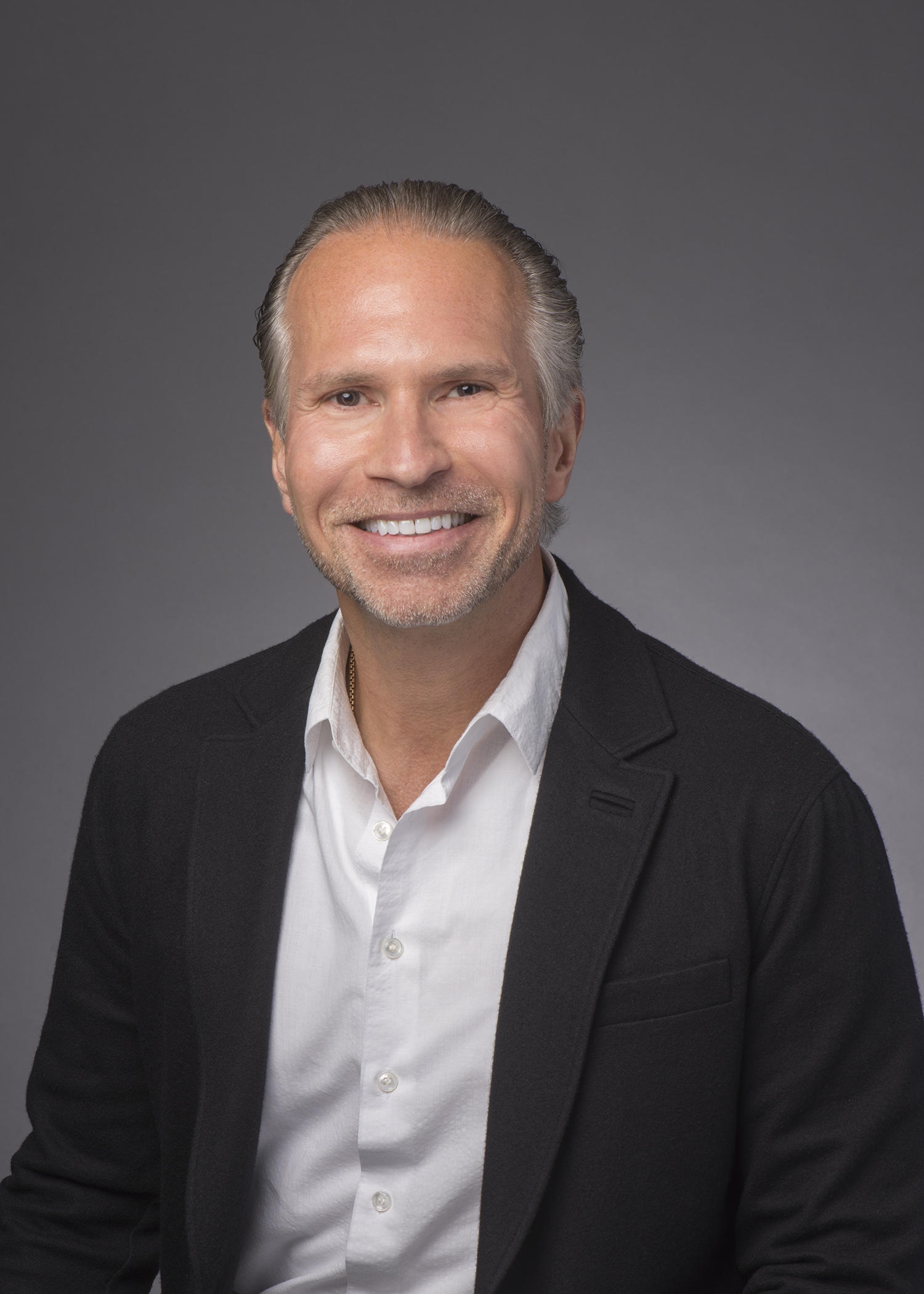 Paul Mashni is the Founder and CEO of Professional Equity Management (PEM), a vertically integrated real estate investment firm specializing in multifamily properties. With over 30 years of experience and more than 25,000 apartment units acquired, Paul has successfully navigated five downturns while maintaining an average IRR of 20%+ since inception. His investment philosophy is guided by the principle that it’s “better to sell a year too early than a day too late.” His background in accounting and finance, along with his law degree from Wayne State University, informs PEM’s disciplined approach to investments. Paul holds a Bachelor of Science in Accounting and an MBA in Finance from Michigan State University.